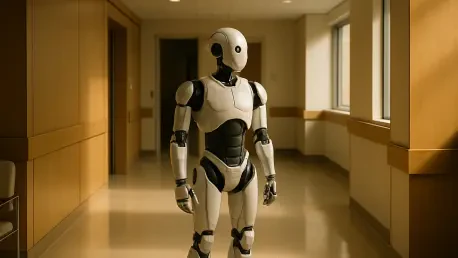

The emergence of Reachy 2 represents a significant leap for Pollen Robotics, marking a definitive transition from experimental research prototypes to a high-performance humanoid platform capable of handling real-world complexity. Founded by visionary researchers in Bordeaux, the company has spent years refining the delicate balance between a machine’s practical utility and its capacity to interact naturally within human environments. This latest iteration is not merely a tool for observation but a robust partner designed to bridge the gap between digital intelligence and physical labor. By integrating sophisticated hardware with a steadfast commitment to an open-source philosophy, the system seeks to establish a new industry standard for researchers and commercial enterprises looking for a versatile, bio-inspired robotic companion. This development comes at a time when the demand for accessible yet powerful robotics has reached a fever pitch, necessitating platforms that are as easy to program as they are capable of performing intricate physical tasks. The journey of this robot highlights a fundamental shift in how humanoid systems are conceived, moving away from rigid industrial aesthetics toward a more organic, adaptable form that feels at home in laboratories, hospitals, and service-oriented spaces alike. As the industry matures, the focus on democratizing these advanced technologies ensures that innovation is not confined to a few well-funded labs but is shared across a global community of developers.
The Evolution of Motion: Bio-Inspired Design Principles
The technical foundation of this humanoid robot lies in the groundbreaking Orbita joint system, a mechanical breakthrough that mimics the fluid and nuanced movement of human anatomy. Unlike traditional robotics that typically rely on rigid, linear motion restricted to specific planes, this bio-inspired approach allows for complex, multi-directional articulation that feels remarkably natural. This design philosophy was first brought to the global stage during the 2020 Consumer Electronics Show, where the robot’s expressive features and organic movement immediately set it apart from its purely industrial counterparts. The ability to tilt, rotate, and swivel with human-like grace is not just an aesthetic choice; it is a functional necessity for robots intended to operate in environments designed for people. By replicating the degrees of freedom found in the human neck and shoulder, the system can navigate tight spaces and interact with objects from angles that would be impossible for more conventional robotic designs. This mechanical fluidity reduces the mechanical stress on the frame and allows for more efficient energy consumption during prolonged periods of interaction, marking a significant departure from the jerky, stuttered movements common in earlier generations of humanoid research platforms.
Participation in the ANA Avatar XPRIZE served as a critical turning point for the development team, forcing them to prioritize structural robustness alongside their existing dedication to elegance and social presence. To compete on a global stage against the world’s most advanced robotic systems, the platform needed to evolve beyond its initial role as a social interactive tool. The competition required the robot to handle heavier payloads, sustain long periods of remote operation, and maintain high levels of reliability under intense pressure and scrutiny. This challenge led to the realization that the next generation of hardware would require a complete overhaul of its internal drive systems and structural integrity to achieve true industrial-grade performance. Engineers worked to reinforce the chassis and optimize the load-bearing capabilities of each limb, ensuring that the robot could perform meaningful physical work while maintaining the delicate touch required for human interaction. This period of rapid iteration transformed the project from a charming prototype into a serious contender for commercial and academic applications, proving that a modular and open-source project could match the performance metrics of proprietary, high-budget robotic systems.
Engineering Synergy: High-Performance Components and Modularity
A strategic partnership with the maxon group enabled the transition to a more powerful and precise machine, providing the mechanical muscle necessary to match the robot’s sophisticated software. By incorporating specialized brushless motors and high-resolution inductive encoders, the robot gained the torque density required for demanding physical tasks without losing its compact, humanoid form factor. These high-precision components ensure that the joints remain responsive and efficient, even during continuous operation in complex environments where heat dissipation and power management are constant concerns. The integration of MILE inductive encoders provides the system with exceptional feedback accuracy, allowing the onboard controllers to make micro-adjustments in real-time. This level of precision is vital for tasks that require a “soft touch,” such as assisting a patient or handling fragile laboratory equipment. The synergy between the French design team and the Swiss drive specialists resulted in a hardware suite that is both durable enough for daily use and sensitive enough for cutting-edge research in human-robot interaction, effectively bridging the gap between heavy-duty industrial automation and collaborative service robotics.
The modular architecture of the platform is one of its most defining features, offering users the unprecedented ability to customize the robot through various specialized kits. Whether a specific project requires a single-arm tabletop setup for stationary assembly tasks or a full humanoid torso mounted on a mobile base for wide-area navigation, the system can be adapted to fit specific needs with minimal friction. This flexibility ensures that the robot is not a one-size-fits-all solution but rather a versatile tool capable of evolving alongside the user’s changing requirements over several years. Such modularity is particularly beneficial for academic institutions that may want to start with a basic configuration and gradually add more complex sensors or limbs as their research funding grows. By breaking the robot down into functional modules, the developers have lowered the barrier to entry for advanced robotics, allowing smaller teams to experiment with high-end hardware without committing to a static, monolithic system. This approach also simplifies maintenance and repairs, as individual components can be swapped out or upgraded without requiring a total overhaul of the entire robotic structure, thereby extending the operational lifespan of the investment.
Software Accessibility: Open-Source Frameworks and Intelligence
At its core, the robot is built on a foundation of “open-source DNA,” providing the global community with full access to its software resources and comprehensive mechanical plans. By utilizing a Python SDK and the widely adopted ROS 2 framework, the platform remains highly accessible to academic researchers and software developers at top-tier institutions around the world. This transparency encourages a culture of collaboration, allowing developers to integrate their own unique algorithms, share custom behaviors, and contribute to a rapidly growing library of shared robotic capabilities. Unlike proprietary systems that lock users into closed ecosystems, this open approach allows for a faster rate of innovation as the community works together to solve common challenges in computer vision, path planning, and natural language processing. The choice of Python as the primary interface language ensures that even those without a deep background in low-level embedded programming can begin controlling the robot almost immediately. This democratization of technology is essential for fostering a diverse ecosystem where software engineers, AI researchers, and hardware hobbyists can all contribute to the advancement of the humanoid field.
The integration of artificial intelligence is taken a step further through a strategic partnership with Hugging Face, focusing on the cutting-edge field of imitation learning. Using a virtual reality headset and controllers, human operators can teleoperate the robot to perform specific, complex tasks, which the embedded AI then analyzes to identify patterns and replicate the actions autonomously. This “learning-by-demonstration” approach transforms the machine from a simple remotely operated tool into an intelligent agent capable of expanding its own skill set over time without the need for manual, line-by-line coding of every movement. This is particularly transformative for tasks that are difficult to program traditionally, such as folding laundry or sorting objects of varying shapes and textures. As more data is collected through human teleoperation, the robot’s neural networks become more adept at handling edge cases and environmental variables. This bridge between digital intelligence and physical execution is essential for the next generation of autonomous development, as it allows robots to learn from human intuition and dexterity. The result is a system that grows more capable the more it is used, creating a feedback loop where human expertise directly informs robotic autonomy.
Human-Centric Interaction: The Future of Collaborative Robotics
Beyond pure technical specifications and torque ratings, the design of the platform emphasizes the profound importance of social presence and aesthetic appeal in modern robotics. Features such as the asymmetrical eyes and expressive antennas are intentionally designed to reduce the “uncanny valley” effect, making the robot appear more approachable and less intimidating to non-expert users. This human-centric design philosophy is vital for applications in healthcare, hospitality, and any environment where the robot must work in close proximity to people on a daily basis. By providing visual cues through its head orientation and “facial” expressions, the robot can communicate its intent and attention, which makes interactions feel more intuitive and less mechanical. This focus on social robotics suggests that the future of the industry lies not just in what a robot can do, but in how it makes people feel while it is doing it. When a robot can signal that it has seen a person or that it is thinking about a task through subtle physical movements, it builds a level of trust and predictability that is necessary for widespread adoption in public and private spaces.
The versatility of the platform allows it to serve multiple sectors effectively, ranging from high-level academic research into cognitive science to practical industrial cobotics in modern factories. In manufacturing environments, it can assist human workers with delicate assembly tasks that require both precision and a degree of adaptability, while in remote presence scenarios, it allows experts to interact with distant or hazardous environments as if they were physically there. By combining high-end engineering with a focus on natural interaction and open-source flexibility, the robot establishes a new benchmark for what humanoid systems can achieve in a professional context. Stakeholders should consider integrating these modular platforms into their long-term automation strategies, focusing on the gradual implementation of imitation learning to automate repetitive but delicate tasks. Future considerations must include the development of even more specialized end-effectors and the expansion of the mobile base capabilities to handle outdoor or uneven terrain. Organizations that adopted these open-source standards found themselves at the forefront of the robotics revolution, benefiting from a system that was built to learn, adapt, and cooperate within the human world.