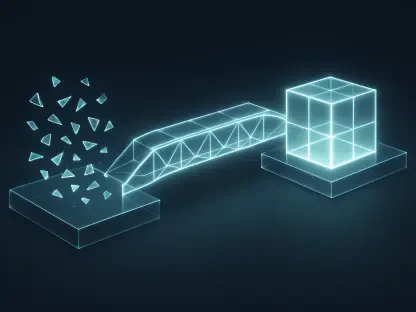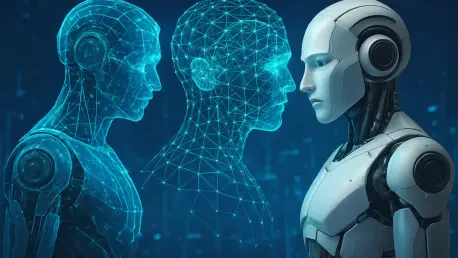

The emergence of Physical AI represents a transformative shift in the technological landscape, moving from autonomous software agents that operate within digital workflows to embodied systems capable of navigating and interacting with the tangible world. This evolution is not merely a hardware upgrade but a fundamental change in how machines perceive, process, and act upon environmental data in an increasingly complex global economy. However, the development of these sophisticated systems faces a significant bottleneck: the inherent danger, high cost, and logistical complexity of training robots in real-world settings. To overcome these hurdles, the industry has reached a consensus that simulations and digital twins are the indispensable pillars of the next industrial revolution. These virtual environments act as the bridge between theoretical AI “brains” and functional physical “bodies,” setting the stage for a future where every physical object has a synchronized digital counterpart.
The current market environment necessitates a departure from traditional testing methods, as the margin for error in physical automation has narrowed to near zero. Developers now recognize that the maturity of robotics depends heavily on the fidelity of the virtual playgrounds where these machines are born. By leveraging massive datasets and high-speed computing, organizations are creating replicas of reality that are indistinguishable from the physical world in terms of physics and logic. This strategic shift is not just about safety; it is about the rapid acceleration of intelligence that would take decades to achieve through physical iteration alone.
The Convergence of Virtual Intelligence and Physical Reality
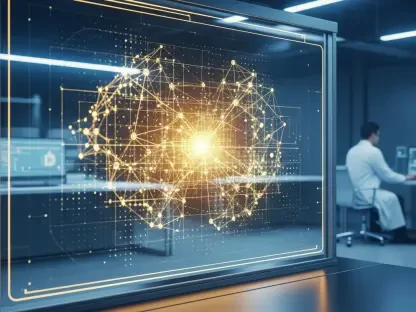
The integration of virtual intelligence into physical reality marks a departure from the era of isolated digital automation toward a more holistic approach to machine learning. In this new paradigm, the digital twin serves as a living laboratory where every variable can be controlled, monitored, and adjusted in real time. This synchronization ensures that when a physical robot encounters a new obstacle, its digital counterpart has likely already simulated and solved that specific problem a thousand times over. The convergence of these two worlds allows for a seamless flow of information that enhances the reliability of autonomous systems across diverse sectors, from heavy manufacturing to delicate medical interventions.
Furthermore, this relationship between the virtual and the physical is becoming increasingly bidirectional. Data harvested from real-world operations is fed back into the digital twin to refine its accuracy, creating a continuous loop of improvement. This “data flywheel” effect means that the more a robot interacts with the world, the smarter its digital twin becomes, which in turn provides better training data for the next generation of robots. This interconnectedness is the cornerstone of modern industrial strategy, allowing companies to predict failures before they occur and optimize performance with surgical precision.
From Software Agents to Embodied Systems: The Evolution of Robotics
To understand the current trajectory of Physical AI, it is essential to look at the historical progression of robotics and simulation leading up to the present day. Traditionally, robots were programmed with rigid, pre-defined instructions to perform repetitive tasks in highly controlled environments, such as automotive assembly lines. As AI progressed, the industry moved toward autonomous software, yet these “brains” remained trapped behind screens, unable to influence the physical world directly. The challenge has always been the “sim-to-real” gap—the notorious difficulty of translating digital intelligence into fluid, reliable physical movement.
Past developments relied on basic 2D layouts and rudimentary simulations that lacked the physics-based accuracy required for complex, multi-variable interactions. These foundational concepts have now evolved into high-fidelity 3D environments that mirror the laws of thermodynamics, friction, and gravity. Industry leaders recognize that Physical AI cannot reach full commercial viability without these safe spaces to learn tasks that would be too risky or expensive to attempt in the real world. This evolution has shifted the focus from merely building better hardware to creating sophisticated virtual ecosystems that can support the growth of embodied intelligence.
The Tripartite Architecture of Modern Robotic Development
The Vital Role of Simulation Computers in Training AI Brains
A critical aspect of Physical AI development is the adoption of a tripartite computing architecture, where the simulation computer serves as the essential middle ground between training and operation. While the training computer builds the robot’s cognitive foundation and the inferencing computer executes behaviors in the real world, the simulation computer provides a risk-free environment for validation. This setup allows developers to run “stress tests”—such as intentional system defects or extreme weather conditions—that would be catastrophic in a physical setting. By using digital twins to create high-fidelity virtualizations, engineers can ensure that a robot’s logic is sound before it ever takes a physical step.
Scaling Intelligence Through Parallel Virtual Realities
Another essential angle is the ability of digital twins to provide unprecedented scalability through reinforcement learning in parallel virtual realities. In a physical laboratory, a developer is limited by the number of hardware units available and the linear progression of time, which naturally constrains the speed of development. However, using digital twins allows for massive parallel testing where a company can take a small physical fleet and simulate thousands of iterations simultaneously in a virtual space. This approach transforms digital twins from mere monitoring tools into powerful developmental engines that accelerate the journey from prototype to industrial workhorse, allowing machines to master complex tasks in days rather than years.
Integrating Agentic AI and Synthetic Data for Enhanced Autonomy
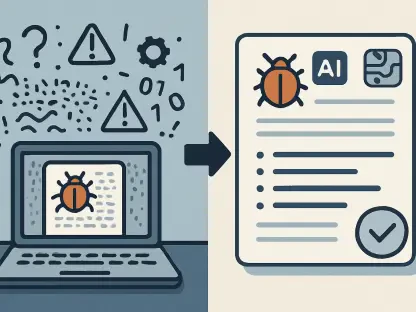
The complexity of Physical AI is further deepened by the integration of agentic AI and synthetic data within digital twin environments. While generative AI is often used to build these virtual worlds, the emerging trend of agentic autonomy grants digital twins the ability to act independently within their simulations. This allows developers to observe emergent behaviors and identify “edge cases”—rare but critical scenarios—that might be overlooked in standard programming. Furthermore, the use of synthetic data helps fill gaps where real-world data is scarce or dangerous to collect, addressing the misconception that simulations are just visual tools rather than living, data-driven entities.
Emerging Trends and the Next Industrial Revolution
The future of Physical AI is being designed with digital twins from the ground up, signaling a decisive move toward software-defined physical infrastructure. We are seeing a shift where the commercialization of robotics depends entirely on hyper-realistic virtual environments that can sync data in real time across global networks. This trend suggests that the next few years will bring a rise in specialized startups—some focusing on sophisticated humanoid “bodies” and others on the intricate AI “brains”—all unified by a reliance on advanced simulation platforms.
Furthermore, as regulatory frameworks begin to catch up with the rapid pace of AI development, digital twins will likely become a mandatory standard for safety certification. These virtual models provide a transparent and repeatable record of a robot’s training history and its reliability under pressure before it is deployed in public spaces. This regulatory shift will likely favor companies that have invested heavily in simulation, as they will be able to provide the necessary data to prove their systems are safe for human interaction.
Strategic Frameworks for Implementing Digital Twin Technology
The analysis of Physical AI and digital twins offers several major takeaways for businesses and professionals looking to stay competitive. Organizations must prioritize virtual-first development, ensuring that every physical asset is preceded by a digital model to optimize performance and safety from the outset. Actionable strategies include investing in high-fidelity simulation platforms and utilizing a diverse mix of real-world and synthetic data to create robust training sets. This approach reduces the capital expenditure required for hardware prototyping while simultaneously increasing the speed of innovation.
For industries like energy and manufacturing, the recommendation is to use digital twins for remote monitoring and predictive maintenance, allowing for the simulation of repairs before sending autonomous agents into harsh or inaccessible environments. By adopting these best practices, stakeholders can bridge the gap between digital potential and physical execution. The focus should remain on building scalable architectures that can adapt to new data, ensuring that the physical systems remain relevant as the underlying AI models continue to evolve.
Bridging the Divide Between the Digital and Physical Worlds
Digital twins emerged as the fundamental architecture that defined the landscape of Physical AI and autonomous systems. By providing a safe and highly precise environment for machine learning, these virtual counterparts allowed autonomous systems to move from controlled laboratories into the unpredictable complexities of the real world. This topic remained significant because it represented the convergence of AI, robotics, and physics-based simulation—the three pillars that upheld the new industrial revolution. As the barrier between the digital and physical continued to blur, the strategic implementation of these technologies defined the era of global industry and efficiency.
The integration of these systems ensured that the transition to an automated world was both safe and economically viable. The reliance on virtual validation before physical deployment became the standard practice that governed the successful rollout of robotics in every major sector. Ultimately, the development of digital twins provided the necessary infrastructure for machines to learn, adapt, and function alongside humans. This journey from simple software to embodied intelligence was facilitated by the precision and scalability of virtual realities, which paved the way for a more resilient and automated global future.