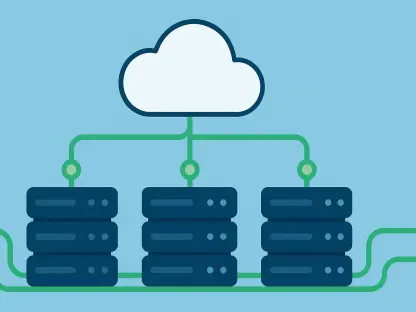

The significant pivot from general-purpose public cloud experimentation to highly controlled, private AI infrastructure indicates a fundamental change in how modern corporations protect their proprietary data assets. While the early adoption phase of artificial intelligence relied heavily on the elastic resources of major cloud providers, the current landscape reflects a mature realization that long-term competitive advantages are best cultivated within sovereign environments. Organizations are no longer content with “renting” intelligence; they are increasingly seeking to own the full stack of their computational destiny to ensure data integrity and operational consistency.
This transition marks the end of the experimental era where speed of access outweighed concerns about data sovereignty. Today, the focus has shifted toward building localized computing power that functions as a protective moat around corporate intellectual property. By moving away from public APIs, companies are effectively reclaiming control over their most valuable information, preventing it from being used to train the general-purpose models of their competitors. This strategic re-localization is reshuffling the power dynamics between hardware manufacturers, specialized data center providers, and enterprise IT leaders who now manage significant on-premises assets.
The Evolution of the AI Ecosystem Toward Sovereign Data Environments
The shift from public cloud sandboxes to production-grade private infrastructure reflects a growing sophistication in enterprise technology management. In the beginning, the cloud offered an unparalleled venue for rapid prototyping and testing, but as models moved into the core of business operations, the limitations of shared environments became apparent. Localized computing has emerged as a necessity for maintaining a competitive edge, allowing firms to process data where it resides without the latency or security overhead associated with external transmission.
Furthermore, the hardware ecosystem has expanded to support this localized demand, with manufacturers delivering high-performance computing units specifically designed for internal data centers. Specialized data center providers are also filling the gap by offering co-location services that provide the benefits of private ownership with the physical security and power management of a professional facility. This decentralized approach ensures that proprietary data remains within a governed perimeter, reinforcing the integrity of the results generated by internal models and protecting them from the risks of the open web.
Decoding the Strategic Drivers and Economic Benchmarks of AI Re-Localization
The Migration Toward Domain-Specific Models and Hybrid Architectures
One of the most prominent shifts in the current market is the move away from trillion-parameter public models toward efficient, specialized Small Language Models (SLMs). These smaller models are designed to excel at specific tasks—such as legal analysis, medical diagnostics, or code generation—rather than attempting to answer any query imaginable. Because SLMs require significantly less computational power to run, they are perfectly suited for deployment on private hardware, allowing enterprises to achieve high performance without the massive energy bills associated with larger architectures.
Moreover, a hybrid deployment strategy has become the standard for large-scale operations, allowing businesses to balance the need for occasional public cloud scalability with the requirement for internal control. For sensitive or high-frequency tasks, companies utilize their private stack, while non-critical or highly variable workloads may still be directed to the cloud. This proximity of data to the point of execution reduces response times and aligns with evolving corporate behaviors that prioritize instantaneous, low-latency interactions for both employees and customers.
Projections for Infrastructure Spending and the Decline of Token-Based Volatility
Financial leaders have become increasingly wary of the token-based pricing models that dominated early AI services, as these variable costs can quickly erode profit margins. The inherent instability of paying per word or per image processed makes it nearly impossible for finance departments to predict annual expenditures accurately. In response, there is a visible shift in capital expenditure from cloud subscriptions to the procurement of private hardware. This move transforms a variable operating expense into a predictable asset, providing long-term financial stability.
Market data forecasts for the period from 2026 to 2028 suggest a steady growth in private AI footprints as organizations actively seek to avoid the traps of subsidized pricing and vendor lock-in. Early cloud pricing was often artificial, designed to attract users, but as those subsidies expire, the true cost of renting intelligence becomes prohibitive. By owning the infrastructure, enterprises can scale their AI usage without a corresponding linear increase in cost, effectively decoupling their operational growth from the pricing whims of external service providers.
Overcoming Operational Friction and Scaling Internal Capabilities
Transitioning to private AI infrastructure is not without its hurdles, particularly regarding the scarcity of specialized talent. Managing complex ModelOps, which involves the continuous integration and deployment of AI models, requires a skill set that bridges the gap between traditional software engineering and advanced data science. Enterprises are currently investing heavily in training internal teams and recruiting specialists who can navigate the nuances of model weight management and local fine-tuning within a private ecosystem.
Beyond human capital, the physical requirements of high-performance computing present significant technical challenges. Modern GPUs generate immense heat and consume vast amounts of electricity, requiring advanced cooling solutions and robust power grids that many older corporate buildings do not possess. Navigating these initial investment costs involves a careful calculation of the long-term operational savings. However, once the foundational hardware is in place, companies find they can move from fragmented “Shadow AI” setups to a centralized, governed platform that offers better performance and lower overall risk.
Mitigating Security Risks and Navigating the Complex Regulatory Climate
The role of private infrastructure in preventing intellectual property leakage cannot be overstated in an environment where data is the primary asset. Public APIs, while convenient, create a “surface area” of risk that many legal departments are no longer willing to accept. By hosting models internally, organizations can ensure that sensitive information—such as trade secrets or customer financials—never crosses the corporate firewall. This level of isolation is crucial for meeting the strict requirements of global data residency laws.
Compliance with industry-specific standards like HIPAA or GDPR is also simplified within a private stack. Organizations can implement custom observability and auditability features that provide deep insight into how every piece of data is being handled. This level of transparency is increasingly required by emerging governance frameworks that demand proof of how AI decisions are reached. Securing these workloads through dedicated internal firewalls and, in some cases, air-gapped environments, provides a level of protection that public cloud environments simply cannot match.
The Long-Term Trajectory of Distributed Enterprise Intelligence
Looking ahead, intelligence is becoming a utility that is owned and operated within the corporate perimeter rather than something that is pulled from a central cloud provider. We are seeing the rise of autonomous enterprise ecosystems that function independently, capable of processing data and making decisions without any external connectivity. This shift is being accelerated by breakthroughs in edge computing, where AI processing occurs on local devices or regional nodes, further reducing the reliance on centralized infrastructure.
Global economic shifts and the availability of specialized hardware will continue to dictate the pace of this adoption, but the general direction remains clear. As decentralized AI processing becomes more efficient, the benefits of centralization will continue to diminish. Organizations that successfully transition to an owned intelligence model will find themselves better positioned to handle future market disruptions, as they will possess the internal capability to adapt their models and infrastructure without waiting for a third-party vendor to update their services.
Evaluating the Strategic Shift Toward Financial and Operational Autonomy
The transition toward private infrastructure served as a critical milestone for enterprises seeking to stabilize their digital operations. The shift was driven by a fundamental need to move away from the unpredictability of the cloud toward a more sustainable and secure foundation. The findings showed that while the public cloud initially provided a useful starting point, it ultimately failed to provide the long-term control and cost efficiency required for production-scale AI. Leadership teams realized that owning the “intelligence engine” of their business was the only way to guarantee both financial predictability and the security of their data.
Consequently, the move toward localized stacks transformed from a technical preference into a strategic imperative. The investigation into infrastructure spending patterns confirmed that the initial capital investment was offset by the elimination of recurring token fees and the reduction of regulatory risks. Leaders who prioritized this transition successfully built a resilient ecosystem that favored stability over short-term convenience. This shift toward private AI now stands as the foundational asset for the next decade of digital growth, ensuring that corporations can innovate with confidence and maintain total autonomy over their digital assets.