
Modern enterprises are discovering that the financial burden of moving data in real-time often outweighs the competitive advantages they hope to gain from their expensive artificial intelligence models. While the promise of instantaneous insight remains a powerful motivator, the reality of maintaining the underlying pipelines often results in a massive drain on technical and financial resources. This tension creates a significant barrier for organizations that need fresh data to power the next generation of autonomous agents and responsive analytics.
The High Price of Real-Time Intelligence
The current landscape of data engineering is defined by a frustrating paradox where streaming is considered essential for modern AI, yet remains financially draining for the majority of enterprises. As organizations transition from static dashboards to active AI agents, the need for low-latency data has skyrocketed. These agents require the most current context to make accurate decisions, but the cost of keeping those data streams open and operational often consumes a disproportionate share of the total IT budget.
This fiscal strain is frequently categorized as a hidden infrastructure tax that penalizes companies for attempting to be agile. Beyond the raw cost of cloud compute and storage, there is the persistent expense of specialized talent required to manage these systems. Every hour spent troubleshooting a stalled pipeline or optimizing a throughput bottleneck is an hour taken away from actual innovation. For many, the high price of real-time intelligence has become a ceiling that prevents small and mid-sized projects from ever reaching a production environment.
Furthermore, the sheer complexity of traditional data ingestion creates a persistent bottleneck that stifles the deployment of autonomous AI agents. When a data pipeline takes months to configure and thousands of dollars to maintain monthly, it limits the variety of data sources an organization can afford to integrate. This scarcity of real-time information leaves AI models operating on stale data, essentially neutering the capabilities of systems designed to react to live market conditions or customer behaviors.
Breaking the Complexity of Traditional Streaming Architectures
The traditional message bus architecture has long been the standard for data movement, but it carries a heavy burden of secondary requirements. Systems like Apache Kafka provide robust performance but often necessitate a sprawling ecosystem of additional tools, including schema registries to validate data structures and specialized connector frameworks. Maintaining these interlocking pieces creates a fragile environment where a single update in one area can cause a cascade of failures across the entire ingestion chain.
Governance remains a persistent gap in these legacy streaming models, as high-velocity data often escapes the standard compliance and lineage protocols applied to batch-processed information. Because the data is in constant motion through various intermediary brokers, tracking its origin and transformations becomes a logistical nightmare. This lack of transparency creates significant risks for regulated industries, where proving data integrity and lineage is a legal requirement rather than a technical preference.
There is also a fundamental friction between the high-velocity needs of modern data streams and the limitations of static data governance frameworks. Most traditional governance tools were built for data that sits still in a warehouse, not for information that flows at thousands of events per second. When organizations try to force-fit streaming data into these older frameworks, the result is either a complete loss of speed or a total abandonment of governance standards, neither of which is acceptable for a modern data-driven enterprise.
Inside Zerobus Ingest: A Direct Path to the Lakehouse
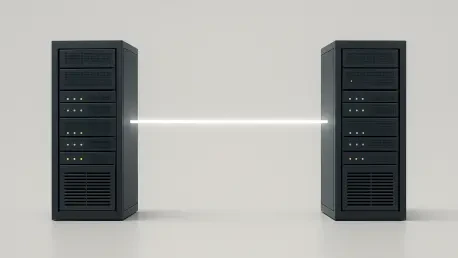
Zerobus Ingest arrives as a managed service specifically designed to bypass the intermediary infrastructure that typically inflates streaming costs. By removing the need for an independent message broker, the service allows data to flow directly from its source into the Databricks environment. This architectural shift eliminates the “middleman” in the data journey, reducing the number of points where failures can occur and significantly lowering the total cost of ownership for real-time pipelines.
The primary advantage of this new approach is its single-destination efficiency, which focuses exclusively on streaming data directly into governed Delta tables. Unlike universal message hubs that attempt to route data to dozens of different endpoints, Zerobus Ingest optimizes the path to the lakehouse. This specialization allows for tighter integration and better performance, ensuring that data is ready for analysis or AI model consumption the moment it arrives, without requiring additional hops through staging areas.
Scalability is handled through a serverless architecture that eliminates the need for manual configuration or capacity planning. The system automatically adjusts its resources based on the incoming data volume, ensuring that sudden spikes in traffic do not crash the pipeline and periods of low activity do not result in wasted expenditure. This “scale-to-zero” capability is particularly valuable for intermittent workloads like telemetry or event-based logs, where traffic patterns are often unpredictable.
Integrating this process with Unity Catalog ensures that every stream is governed, discoverable, and compliant from the moment of ingestion. By embedding governance directly into the ingestion path, Databricks allows organizations to maintain strict lineage and access controls without sacrificing the speed of their data flow. This convergence of movement and management means that security teams and data engineers are no longer working at cross-purposes when deploying new real-time features.
Industry Expert Perspectives on the “Bus-Free” Shift
William McKnight, an industry expert in data strategy, noted that the reduction of operational delays and infrastructure overhead is a major step forward for the sector. He suggested that by removing the complexity of message buses, organizations can finally realize the potential of streaming without the traditional headache of managing a separate broker. This shift allows technical teams to focus on the value derived from the data rather than the mechanics of moving it from point A to point B.
However, the shift to a bus-free architecture involves certain trade-offs that organizations must carefully consider before migrating. While Zerobus Ingest offers unmatched simplicity for single-destination needs, it is not intended to replace a multi-sink message hub that feeds diverse applications across an enterprise. Understanding when to prioritize architectural simplicity over the flexibility of a universal hub is a critical decision for architects aiming to balance cost and functionality.
Stewart Bond, an analyst at IDC, highlighted that the reduced latency provided by this direct-to-lakehouse approach has a profound impact on near-real-time analytics. When the time between a data event occurring and its appearance in a governed table is measured in milliseconds, the range of possible applications expands dramatically. He emphasized that this capability is particularly relevant for fraud detection, inventory management, and personalized customer experiences where every second of delay reduces the value of the information.
The competitive landscape is also reacting to this move, as it aligns with a broader market shift toward simplified ingestion services that eliminate unnecessary overhead. Many cloud providers and data platform vendors are recognizing that customers are exhausted by the “plumbing” of data engineering. By offering a more integrated and less complex solution, Databricks is positioning itself as a leader in a movement that prioritizes operational efficiency over the legacy of distributed systems complexity.
Strategies for Transitioning to Low-Cost Ingestion
The first step in a successful transition involves identifying the specific workloads that are best suited for this streamlined approach. High-velocity IoT sensor data, clickstream events from web applications, and system telemetry are ideal candidates because they often have a single primary destination for analysis. By targeting these high-volume sources first, organizations can see the most immediate impact on their cloud spending and architectural complexity.
Implementation follows a structured two-step framework that starts with the establishment of governed tables within the Unity Catalog. This ensures that the destination is ready to receive data with all necessary security and metadata protocols in place. Following this, engineers leverage prebuilt APIs and SDKs to connect their data sources directly to the service. This process removes the need for custom coding or the configuration of complex third-party connectors, significantly shortening the time to deployment.
Moving from the phase of experimental pilots into full production often requires collapsing the ingestion pipeline to reduce the number of potential failure points. Many projects fail to scale because the infrastructure required to support them becomes too unwieldy as data volumes grow. By simplifying the path to the lakehouse, organizations were able to stabilize their real-time initiatives and move away from the “pilot purgatory” that frequently stalls digital transformation efforts.
Aligning streaming costs with business value was the final piece of the puzzle for maintaining long-term AI initiatives. Stakeholders were more likely to support continued investment in real-time capabilities when the ROI was clearly visible and not obscured by massive infrastructure bills. Leaders focused on cost-efficiency as a foundational requirement for innovation, ensuring that their data strategies remained sustainable even as the volume of information continued to expand. This transition represented a significant shift in how enterprises approached the lifecycle of their most valuable data assets.