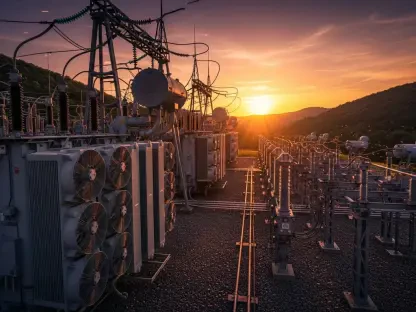

In a cloud computing landscape overwhelmingly dominated by hyperscalers like Amazon Web Services and Google Cloud, the emergence of a vertically integrated competitor positioning itself for the AI era without the industry’s most coveted hardware is a development of significant strategic interest. Railway, a company that began its journey in 2020 as a Platform-as-a-Service, has executed a profound transformation, evolving from a consumer of Google’s infrastructure to a full-fledged cloud provider with its own co-location data centers. This pivot, finalized in 2024, marks a direct challenge to the established order, as Railway now offers granular access to foundational cloud resources. The company’s multifaceted business model, technological differentiators, and ambitious market strategy represent a calculated gamble on a future where developer experience and CPU efficiency could outweigh the raw power of specialized processors, even in the age of artificial intelligence.
A Developer-First Philosophy Built on Custom Tech
At the very core of Railway’s strategic vision lies a commitment to simplifying the developer experience while simultaneously providing powerful, low-level capabilities. Founder and CEO Jake Cooper has articulated that the company dedicated the last five years to meticulously constructing a comprehensive, proprietary technology stack that spans “from dashboard to data center.” This integrated ecosystem includes bespoke hardware, a custom networking layer, and a unique orchestration engine designed to abstract away the inherent complexities of infrastructure management. By automating critical operational duties and offering built-in telemetry services—such as logs, traces, and a full querying engine for custom metrics—Railway aims to liberate developers from the burdensome tasks of provisioning, monitoring, and implementing security protocols from scratch. This approach is designed to strike an optimal balance, empowering developers with granular control over their environment without sacrificing the speed and simplicity essential for modern application development.
A pivotal and distinguishing feature of Railway’s architecture is its conscious decision to forgo Kubernetes, the ubiquitous industry standard for container orchestration. In its place, the company has engineered its own bare-metal orchestration layer, a choice that, when combined with its custom rack-scale hardware design, underpins its assertions of superior performance and efficiency. This deep vertical integration is the key enabler of what Cooper claims is a significant competitive advantage: the ability for developers to get applications and services fully operational in a matter of seconds, a stark contrast to the minutes often required on other major platforms. This relentless focus on speed is not merely an incremental improvement but is presented as a fundamental benefit for contemporary development workflows, where rapid iteration and deployment are paramount. By controlling the entire stack, Railway can fine-tune every component for maximum performance, offering a streamlined and highly responsive development environment that is difficult to replicate using off-the-shelf components.
Disrupting the Market with Speed and Savings
Railway’s disruptive model is rapidly gaining market traction, a trajectory significantly bolstered by a recently announced $100 million Series B funding round. This substantial capital infusion is fueling the expansion of its customer base, which has now reached 100,000 paid users across 25,000 distinct businesses. The company’s clientele is notably diverse, encompassing a wide spectrum from small and medium-sized enterprises to large Fortune 500 corporations. The presence of high-profile customers such as Bilt, Profound, MGM Resorts, and TripAdvisor’s Cruise Critic validates its appeal across various industries. This growing influence positions Railway not just as a challenger to the established hyperscalers but also as a prominent player among a new wave of “neocloud” providers and developer-centric platforms like Render, Northflank, and Replit, all competing to deliver superior ease of use and efficiency to software developers.
A central pillar of Railway’s competitive strategy is its aggressive and transparent pricing structure, which is explicitly designed to undercut the often complex and costly models employed by major cloud providers. The company’s end-to-end control over its hardware and software allows it to optimize for cost-efficiency, passing those savings on to its customers. A prime example is its network egress pricing, which is set at a flat rate of $0.05 per gigabyte. This is significantly more competitive than AWS, which charges $0.09 per gigabyte for initial tiers and only offers a comparable rate for massive data transfers exceeding 100 terabytes per month. Moreover, Railway utilizes a per-second billing model and leverages its custom infrastructure to achieve what Cooper describes as “ultra-density,” enabling it to run as many as 10,000 processes on a single machine. This high density is claimed to result in a lower total cost of ownership for users over time when compared to equivalent serverless offerings from its larger rivals.
The High-Stakes Gamble on a CPU-Centric AI Future
Railway is strategically positioning itself to capitalize on the surging demand for AI infrastructure, promoting its platform as an ideal environment for deploying AI-driven workloads. The company’s emphasis on high performance and rapid deployment times resonates strongly with the needs of AI developers, with CEO Jake Cooper noting that “deployment in seconds is almost table stakes for a lot of agents.” The fact that AI infrastructure startup Kernel is among its customers underscores its growing appeal in this sector. However, the platform faces a significant and potentially limiting caveat: its current lack of support for Graphics Processing Units (GPUs), the specialized hardware that has become the de facto standard for training and running most large-scale AI models. Cooper has acknowledged this gap, clarifying that the company’s primary focus has been on optimizing CPU use cases to the point where templates exist for running certain open-source models on its performant CPUs. While he affirmed a “full intention of becoming the best intelligent cloud for integrating with and running AI applications,” a specific roadmap for GPU availability has not been disclosed.
This conspicuous absence of GPUs has elicited a range of perspectives from industry analysts, who see it as a critical factor in the company’s future growth within the AI space. Some experts, like independent consultant Larry Carvalho, have noted that while the Series B funding is a strong positive signal, the lack of GPU support could significantly hinder Railway’s ability to capture a larger share of AI workloads in a crowded market. Conversely, Jim Frey, an analyst at Omdia, has offered a more nuanced take, suggesting that Railway is strategically carving out a unique niche. He observed that while competitors like CoreWeave and Vultr are focused on providing the massive, GPU-heavy infrastructure required for large-scale AI, Railway has pursued a different path. This strategy has targeted the broader market of developers and enterprises who prioritize a simpler, faster, and more cost-effective route from development to production for the vast number of applications that are not exclusively dependent on GPU-intensive tasks. This positioned Railway as a formidable provider focused on general application hosting and CPU-bound workloads, which still constituted an immense segment of the cloud market.