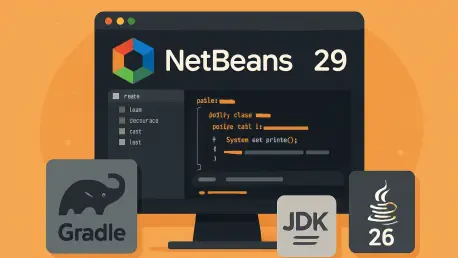

The release of Apache NetBeans 29 marks a pivotal moment for developers who rely on a robust, open-source integrated development environment to navigate the increasingly complex landscape of modern software engineering. This version emphasizes deep integration with foundational build systems, specifically addressing long-standing hurdles within the Gradle ecosystem by allowing classes from specific source sets to execute directly within Gradle actions. Simultaneously, the Maven integration has been elevated to version 3.9.12, which introduces essential stability fixes for classpath unification while paving the way for the future with early-access testing for JDK 26. These refinements ensure that the IDE remains a primary choice for high-stakes enterprise projects that require seamless transitions between different Java versions. By prioritizing toolchain modernization, the development team effectively minimized the friction often associated with managing large-scale, multi-module builds through a more responsive and intelligent indexing engine. Furthermore, the upgrade to the nb-javac compiler provides a more consistent experience across various operating systems, ensuring that build errors are caught earlier in the lifecycle.
Enhancements in Language Processing and Syntax Analysis
Beyond the underlying build infrastructure, this update introduces significant optimizations for core language services, notably improving the responsiveness of refactoring and “find-usage” operations for Java practitioners. The removal of legacy components, such as the outdated Applet API templates, signals a clear commitment to a leaner and more contemporary development experience. In the realm of web development, the CSS parser now accommodates modern styling requirements by supporting image-set includes and various pseudo-elements, while JavaScript parsing has been toughened to better identify private class elements and invalid constructors. PHP developers gain improved code folding for complex heredoc and nowdoc syntax structures, making large files significantly easier to navigate. Additionally, the inclusion of Groovy 3.0.25 support reflects a holistic approach to maintaining polyglot environments where diverse scripting languages must coexist. These incremental but vital changes collectively reduce the cognitive load on engineers managing multifaceted web and enterprise applications by providing more accurate error highlighting and smoother code navigation throughout the coding process.
Modernizing Enterprise Workflows and Platform Reliability
Enterprise-grade capabilities were expanded through a revamped connection dialog that simplified interactions with modern data warehouses like Snowflake, BigQuery, and DuckDB. This shift toward cloud-native and high-performance database support was complemented by the inclusion of JSP 3.0 and an updated embedded Tomcat server, which ensured that the IDE remained a viable platform for Jakarta EE development throughout 2026. On the version control front, the integration of an improved Git history log and expanded support for Codeberg projects via the JGit library provided a more fluid collaborative experience for distributed teams. To ensure long-term platform stability, the internal filesystem was aligned for upcoming Valhalla compatibility while redundant features like Mylyn were retired to reduce technical debt. Developers should have prioritized auditing their existing project configurations to leverage these new build tool efficiencies. Transitioning away from legacy templates and adopting the modernized debugging tools was essential for maintaining peak performance as software architectures continued to evolve. Moving forward, teams should have implemented these updates to secure their workflows against future shifts in the Java ecosystem.