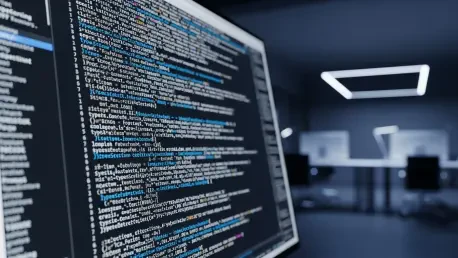

The digital perimeter of one of the world’s most prominent artificial intelligence laboratories recently suffered a startling breach that was not the result of a sophisticated cyberattack, but rather a simple configuration oversight. Anthropic, the creator of the Claude series of large language models, unintentionally exposed the complete source code for its “Claude Code” command-line interface tool to the public. This massive disclosure involved more than 512,000 lines of TypeScript code and nearly 2,000 individual files, effectively providing a comprehensive blueprint of the internal mechanics that drive their developer-focused ecosystem. For researchers and software engineers globally, this incident has transformed a proprietary black box into an open-source case study, offering a rare and unfiltered view into the high-level engineering philosophies and hidden experimental features that define the current state of autonomous AI development in 2026.
The technical mechanism behind this exposure was rooted in the distribution of the @anthropic-ai/claude-code package on the npm registry, where a significant oversight occurred during the build process. A massive source map file, totaling approximately 59.8 MB, was included in the public distribution instead of being restricted to internal development environments. In modern software engineering, these .map files are used to connect compressed, obfuscated production code back to its original, human-readable source for debugging purposes. By failing to exclude this specific file, Anthropic inadvertently allowed third parties to deobfuscate the entire codebase, revealing the project’s structure and logic. The discovery quickly went viral across developer forums, leading to the creation of numerous GitHub mirrors that gained thousands of stars before the company could respond to the situation.
Architectural Deep Dive and Engineering Philosophy
The “Super Brain” and Core Logic
At the heart of the leaked architecture is a sophisticated reliance on the Bun runtime, a choice that underscores a preference for high-performance execution and modern developer experience over more traditional Node.js environments. The system utilizes React in conjunction with the Ink library to facilitate a complex terminal user interface, demonstrating how modern web technologies are being adapted to create powerful command-line tools. However, the most significant component discovered within the repository is the “Query Engine,” a massive module containing tens of thousands of lines of code. This engine serves as the central nervous system for the AI’s operations, managing everything from complex reasoning cycles to the precise monitoring of token consumption during inference tasks. It represents the logic layer where the abstract capabilities of the Claude model are translated into concrete actions within a local file system.
The “Query Engine” is not merely a bridge between the user and the model; it is an elaborate orchestration layer that implements “chain of thought” reasoning as a programmatic standard. The code reveals how Anthropic engineers have structured the AI’s decision-making process, ensuring that the agent can break down multifaceted software development tasks into manageable sub-steps. This logic includes specific safeguards and validation checks that monitor the AI’s interactions with the user’s local environment, preventing erratic behavior while maintaining a high degree of autonomy. By analyzing this file, developers have gained insights into how Anthropic manages the delicate balance between large-scale language model inference and the granular, deterministic requirements of software engineering, providing a template for building reliable AI-driven development tools.
Tool Integration and Agent Coordination
The leaked repository details a robust ecosystem of over 40 independent modules that grant Claude Code an extensive range of capabilities, far exceeding simple text generation. These tools allow the AI to perform deep-level system interactions, such as executing Bash commands, reading and writing files with precision, and integrating directly with Language Server Protocols to navigate complex codebases. This modular approach allows the system to treat every aspect of the development environment as a callable function, enabling the AI to act as a truly integrated member of a technical team. The engineering behind these modules shows a high level of maturity, with careful attention paid to how the AI interprets terminal output and handles errors during long-running tasks like refactoring or debugging.
Perhaps the most forward-looking discovery in the codebase is the presence of a multi-agent coordinator, a system designed to manage several AI workers simultaneously. This component suggests a shift toward a paradigm where a single user prompt can trigger a synchronized effort among multiple subordinate agents, each specializing in a different aspect of a project. For instance, one agent might handle front-end updates while another simultaneously audits the back-end security protocols, all under the supervision of a central controller. This architectural choice indicates that Anthropic is actively moving beyond the concept of a single “chatbot” assistant and toward a comprehensive, multi-layered workforce. This coordination logic provides a glimpse into how complex, enterprise-grade software tasks will be automated through 2027 and beyond.
Unveiling Hidden Features and Experimental Projects
Project Kairos and Autonomous Daemons
Among the many revelations found within the 1,900 files, the most intriguing is the mention of “Project Kairos,” an experimental initiative centered on the creation of autonomous “daemons.” Unlike traditional AI assistants that remain dormant until prompted by a human user, Kairos is designed to function as a persistent background process with its own integrated memory and long-term state management. This “always-on” capability allows the agent to monitor a codebase in real-time, proactively identifying bugs, suggesting optimizations, or even performing routine maintenance without human intervention. The code suggests that Kairos maintains a deep, persistent understanding of the project’s evolution, effectively acting as a digital maintainer that lives within the repository itself, marking a significant evolution in AI autonomy.
The implementation of these autonomous daemons reveals a sophisticated approach to memory and context management that goes beyond the standard context windows of current models. The leaked files show how Kairos utilizes specialized storage mechanisms to keep track of historical changes and architectural decisions, ensuring that its suggestions remain consistent with the long-term goals of the project. This persistent state allows the AI to develop a form of “institutional knowledge” about a specific codebase, a feat previously reserved for senior human developers. By moving toward a daemon-based model, Anthropic is signaling a future where AI is not just a tool used by developers, but a continuous participant in the software lifecycle that operates independently to ensure code health and performance.
Employee Modes and Internal Culture
The leak also brought to light several “internal-only” features that offer a unique look at how Anthropic employees interact with their own technology. One of the most discussed findings is the “Undercover Mode,” a specialized setting designed to erase AI-generated traces from commit records in public or internal repositories. This feature essentially scrubs the metadata that would typically identify a block of code as being produced by Claude, allowing the work to appear as if it were manually authored by a human. While likely intended for internal testing or to avoid cluttering version history with AI signatures, its existence has sparked a broader conversation about transparency and the ethics of AI-assisted development in professional environments. This discovery highlights the complexities of integrating AI into established workflows.
In a surprising departure from the serious nature of high-level AI research, the codebase also contained a “Buddy System,” which functions as a virtual pet gamification feature. This system includes 18 different species of digital pets, complete with rare “shiny” variants, providing developers with a lighthearted distraction within the command-line interface. This inclusion humanizes the engineering team at Anthropic, showing a culture that values creativity and playfulness even while building world-changing technology. The presence of such a detailed, non-functional system inside a professional tool suggests that the engineers were building “Claude Code” as a platform they themselves would enjoy using daily. This blend of high-stakes utility and whimsical internal culture provides a well-rounded view of the team behind the models.
The Claude Code leak stands as a transformative moment for the industry, offering an unprecedented level of transparency that was never intended to be shared. It has provided the global community with a masterclass in AI engineering, exposing the intricate mechanisms required to build reliable, autonomous agents. Organizations looking to integrate similar technologies should take this as an opportunity to audit their own deployment pipelines, ensuring that source maps and sensitive metadata are strictly controlled. Furthermore, the shift toward autonomous daemons and multi-agent systems suggests that the next phase of software development will focus on persistence and coordination. Developers should begin exploring persistent AI architectures and multi-agent frameworks to stay competitive in an environment where AI is no longer a static assistant but an active, always-on contributor to the technological ecosystem.