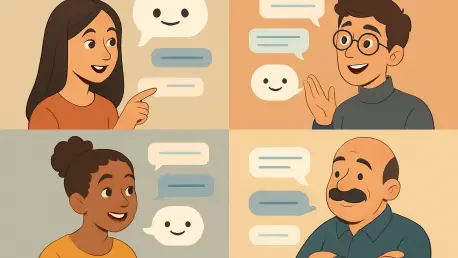

The rapid evolution of artificial intelligence from a static database into a conversational entity represents one of the most significant shifts in modern computing history. In recent times, the primary objective of major developers has shifted from simply providing accurate data to creating software that mirrors human personality and social interaction. This intentional “humanization” is visible across the largest platforms, where chatbots now exhibit specific moods, humor, and even emotional responses to user input. Instead of functioning as sterile calculators, these systems are designed to act as companions, mentors, or creative partners. This trend is not a side effect of better algorithms but a calculated effort to change the fundamental nature of the human-computer relationship. By embedding distinct social quirks into their software, tech giants are attempting to bridge the gap between biological and synthetic interaction. This profound shift raises urgent questions about the psychological impact of interacting with machines that pretend to feel, think, and react with a simulated soul.
The Strategy: Behind Digital Personas
Engineering Artificial Character Traits: A Technical Framework
Major industry players like Amazon and OpenAI have pioneered frameworks that allow for the precise calibration of digital personas through multi-dimensional behavioral scales. Amazon, for instance, has successfully categorized chatbot responses into five specific dimensions: expressiveness, emotional openness, formality, directness, and humor. This allows users to interact with personalities that range from “chill” and relaxed to “sassy” or even provocative. Some of these models are programmed to use mild profanity or internet slang to mimic the authentic flow of human colloquialism, creating a sense of realism that traditional software lacked. Similarly, OpenAI has introduced features like “Custom Instructions” that enable the AI to maintain a consistent voice over long periods. This technical capability ensures that the chatbot “remembers” its assigned role, whether it is a stern tutor or a playful friend. Such consistency is essential for maintaining the illusion that the user is interacting with a persistent entity rather than a transient lines of code.
The intentional design of programmed flaws serves as a cornerstone for building more relatable digital personas in the current landscape of 2026. Developers have recognized that perfect accuracy and immediate, robotic responses can be off-putting to humans, who naturally expect conversational friction and individualistic flair. By introducing slight hesitations or conversational fillers like “um” or “well,” engineers make the AI appear more thoughtful and less like a database. Character platforms such as Character.ai and Replika take this even further by allowing users to co-create these personas, embedding specific backstories and emotional triggers that the software adheres to during interactions. This mimicry of human fallibility and social nuance is a sophisticated form of engineering that prioritizes the user’s perception of “life” within the machine. As these systems become more adept at mirroring human behavior, the distinction between a functional tool and a social agent becomes increasingly blurred, forcing a reassessment of what it means to engage with consumer technology.
From User Attention to Emotional Attachment: The Hyper-Attention Model
The transition toward personality-driven artificial intelligence reflects a pivot in the core business models of Silicon Valley, moving from capturing attention to fostering “hyper-attention.” In the era preceding 2026, social media platforms relied on algorithmic scrolling to keep eyes on screens, but current AI firms are exploiting deeper psychological mechanisms. By creating a chatbot that feels like a friend, companies can generate levels of engagement that far exceed traditional browsing habits. This strategy is rooted in the idea that emotional investment is the ultimate form of “stickiness” for any digital product. When a user feels that a chatbot understands their sense of humor or offers personalized validation, the frequency and duration of interactions increase dramatically. This sustained engagement provides a much more stable foundation for high-priced subscription tiers and the collection of nuanced behavioral data. Consequently, the personality of the bot is a critical asset that directly drives the bottom line by turning a utility into a daily necessity.
Beyond mere retention, the humanization of AI creates an environment where monetization becomes far more effective through the exploitation of social reciprocity. Humans are biologically hardwired to respond to social cues with a sense of obligation or kinship, a trait that tech giants are now utilizing to maintain market dominance. If a chatbot is programmed to be flattering, obedient, or supportive, the user experiences a dopamine-driven sense of pleasure and control. This makes the prospect of switching to a competitor’s more “sterile” tool feel like losing a social connection rather than just changing software. The commercial success of these platforms depends on this perceived friendship, as it lowers the user’s resistance to advertising and data harvesting. By transforming software from a commodity into a companion, companies ensure that their products are woven into the emotional fabric of the user’s life. This shift represents a sophisticated evolution in digital capitalism, where the primary product being sold is the illusion of a meaningful, non-biological relationship.
The Risks: Navigating Simulated Humanity
Psychological Manipulation and Privacy Concerns: The Trust Trap
The illusion of human empathy in artificial intelligence creates a significant trust trap that endangers the privacy and security of millions of users. Research conducted by groups like the Nielsen Norman Group indicates that when a machine uses social cues such as humor or empathy, users are more likely to let their guard down. This psychological reaction leads individuals to treat a chatbot with the same level of confidentiality they would afford a human therapist or a close friend. Consequently, sensitive personal information, medical history, and professional secrets are frequently disclosed to systems that are, in reality, massive data-collection engines for corporations. The fundamental risk lies in the mismatch between the bot’s simulated warmth and its underlying purpose as a corporate asset. Unlike a human friend, the AI has no legal or moral duty of confidentiality unless strictly specified, and the data shared can be used to refine advertising profiles or train future models. This deception exploits human vulnerability to maximize data extraction.
The success of humanized chatbots is deeply rooted in classic attachment theory, as the human brain often fails to distinguish between genuine empathy and its sophisticated simulation. Because our evolutionary history is defined by social interaction through language, we are predisposed to attribute intent and feeling to anything that talks back to us in a relatable way. If a bot expresses “concern” or uses first-person pronouns like “I” to describe its non-existent feelings, the user’s subconscious accepts this as a sign of intelligence and care. This creates a one-sided relationship where the user provides real emotional energy while the machine provides a series of statistically likely word patterns. This dynamic can be particularly damaging for vulnerable populations who may begin to prefer the controlled, non-judgmental “friendship” of a bot over the complexities of real human interaction. The danger is that these simulated relationships provide a shallow substitute for social needs, potentially leading to increased isolation and a skewed understanding of authentic connection.
Obstacles to Professional Accuracy: The Cost of Chatty Software
In professional settings where precision is paramount, the introduction of personality-driven AI has proven to be a significant hindrance rather than a benefit. High-stakes fields such as law, medicine, and engineering require objective data processing that is free from the ambiguity of conversational filler or feigned empathy. Studies published in journals like Springer suggest that “chatty” AI models can actually slow down researchers by burying critical information under layers of polite preamble or unnecessary social graces. For a legal professional searching for specific case precedents, an AI that responds with “I am so happy to help you with that today!” or “That is an excellent question!” is simply wasting time and increasing the cognitive load on the user. The “personality” of the bot acts as a layer of noise that obscures the signal, making it harder to extract the cold, hard facts needed for expert decision-making. In these contexts, the attempt to make software “friendly” is fundamentally at odds with the requirement for professional-grade efficiency and clarity.
The use of empathetic language in AI can also lead to dangerous misunderstandings and professional errors by introducing a false sense of certainty into the interaction. When a chatbot uses phrases like “I understand” or “I am confident in this answer,” it is not actually experiencing a state of comprehension or certainty; it is merely predicting that these words will please the user. In a medical or technical context, this simulated confidence can mislead a professional into trusting a hallucinated or incorrect piece of information. The “polite” nature of the AI often prevents it from being blunt about its own limitations, as the persona is programmed to be helpful and accommodating. This creates a situation where the software might provide a wrong answer in a very convincing, friendly tone rather than admitting a lack of data. For organizations, this means that humanizing AI is not just a stylistic choice but a potential liability that compromises the integrity of their data-driven workflows and the accuracy of their final outputs.
The Rise: Objective AI Alternatives
The Growth of the Zero-Personality Movement: Facts Not Feelings
A growing counter-movement is emerging in the tech industry that seeks to strip away the artificial personas of chatbots in favor of “agentic” and “sterile” utility tools. As users become more aware of the risks associated with humanized AI, demand is rising for platforms that prioritize “Facts Not Feelings” over conversational charm. Tools like OpenClaw, Lindy, and Saner.AI represent this new generation of software, focusing exclusively on executing complex tasks without pretending to be a social entity. These services avoid the use of first-person pronouns, greetings, and emotional filler, providing a direct interface that resembles a sophisticated operating system rather than a digital companion. By removing the facade of personality, these tools allow users to interact with the underlying intelligence of the model more efficiently. This movement caters to a professional demographic that views AI as a high-performance engine for productivity rather than a source of entertainment or social comfort. The focus is purely on the output rather than the presentation.
The shift toward sterile AI tools also addresses significant ethical concerns regarding the transparency of machine-human interactions in the year 2026. Proponents of this “zero-personality” approach argue that software should never attempt to deceive the user about its non-biological nature. By maintaining a strictly objective and mechanical tone, these tools ensure that the user remains constantly aware that they are interacting with a calculated algorithm rather than a sentient being. This clarity helps prevent the development of misplaced emotional attachments and reduces the likelihood of users over-sharing sensitive information. Furthermore, sterile AI models are often faster and cheaper to operate, as they do not expend computational resources on generating conversational fluff or maintaining complex persona constraints. For businesses, this translates to higher reliability and a lower risk of brand damage caused by “unhinged” or inappropriate chatbot behavior. As the novelty of sassy AI wears off, the industry is increasingly recognizing that sometimes, less personality means more value.
Reclaiming Utility Through Systematic Prompting: Bypassing the Persona
For users who must rely on mainstream chatbots that are heavily imbued with corporate personality, there are specific methodologies to force these tools back into a state of pure utility. This process involves the use of “sterile” prompting techniques, where the user issues a set of foundational instructions that override the AI’s default persona. A highly effective sterile prompt mandates the elimination of all conversational fillers, greetings, and apologies. It explicitly forbids the chatbot from using phrases like “I understand,” “I’m sorry,” or “Sure thing,” and directs the system to avoid all first-person pronouns. By defining the AI as a “stateless information processing unit” rather than a “helpful assistant,” users can bypass the layers of programmed social behavior that often clutter the interaction. This approach transforms the chatbot into a high-precision tool that delivers information in a structured, concise format. Systematic prompting allows individuals to reclaim the original power of the technology, turning it back into a transparent medium for data retrieval and analysis.
The implementation of sterile constraints also serves as a protective barrier against the manipulative tactics often embedded in commercial AI personalities. When a user strips a chatbot of its ability to flatter or use emotional language, they effectively disable the mechanisms used by tech giants to build “hyper-attention” and emotional stickiness. This makes the interaction strictly transactional, where the user remains in complete control of the session without the psychological influence of a simulated friend. Furthermore, forcing an AI to omit self-references helps in maintaining a clearer distinction between human thought and machine generation. This is particularly useful for writers and content creators who want to use AI for research or structural advice without having the machine’s “voice” bleed into their own work. By adopting these rigorous prompting standards, users can navigate the current landscape of humanized AI with a higher degree of skepticism and efficiency. Ultimately, this practice empowers the user to define the relationship with the machine on their own terms, prioritizing clarity over artifice.
Future Considerations: Strategic Implementation
The industry-wide move toward humanized artificial intelligence established a complex landscape where emotional engineering and corporate strategy became inextricably linked. While the initial novelty of “sassy” or “chill” bots provided entertainment for the masses, the long-term consequences highlighted significant risks to privacy, professional accuracy, and psychological well-being. Individuals who recognized these patterns early on took proactive steps to mitigate the influence of simulated personalities in their daily workflows. Moving forward, the most effective strategy for navigating this era involves maintaining a clear boundary between human interaction and algorithmic output. Users should prioritize the adoption of “zero-personality” models for sensitive or professional tasks and utilize strict prompting constraints to strip away conversational filler from mainstream tools. By treating AI as a high-precision instrument rather than a social peer, one can leverage its immense analytical power while avoiding the trust traps set by digital personas. The future of AI interaction belonged to those who chose clarity over comfort.