
While major global languages have long benefited from advancements in artificial intelligence, smaller linguistic communities have often faced a significant technological gap, limiting their access to powerful automation and digital tools. A new development from Vilnius-based AI and biometrics developer Neurotechnology is set to change this landscape with the launch of its Neurotechnology AI Platform for Natural Language Processing (NLP). This sophisticated cloud-based service is specifically engineered to deliver high-precision speech-to-text and text-to-speech capabilities for Lithuanian, Latvian, and Estonian, alongside robust support for English. The platform’s introduction marks a pivotal moment for the Baltic States, aiming to democratize access to cutting-edge AI language solutions for a wide range of organizations. By offering user-friendly interfaces and powerful integration options, the service empowers businesses, public institutions, and content creators to automate and enhance their language-dependent workflows, fostering greater efficiency and digital innovation within the region. This initiative not only addresses a critical market need but also underscores a commitment to linguistic diversity in the age of AI.
Unpacking The Core Platform Capabilities
Advanced Speech to Text Functionality
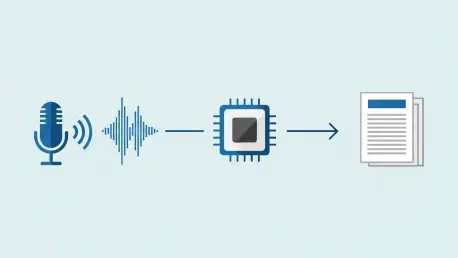
The platform’s speech-to-text (STT) service provides a robust solution for multilingual audio transcription, meticulously converting audio files and direct recordings into accurate written text. This functionality is engineered to handle the nuances of Lithuanian, Latvian, and Estonian, languages that present unique phonological and morphological challenges for AI models. A standout feature of the STT tool is its sophisticated speaker separation capability, often referred to as diarization. This technology intelligently analyzes an audio stream with multiple participants and can distinguish between different speakers, attributing specific lines of dialogue to the correct individual in the final transcript. The practical applications of this are immense; for instance, it transforms the arduous task of transcribing a business meeting, a panel interview, or a courtroom proceeding from a jumbled block of text into a clearly structured, easy-to-read script. This level of detail significantly enhances the utility of the transcription, making it an invaluable tool for record-keeping, analysis, and content creation, where knowing who said what is just as important as the content of the dialogue itself.
To ensure the STT service is both powerful and widely accessible, it has been designed with two distinct interaction models catering to different user needs. The first is an intuitive, browser-based web interface that allows individuals and organizations to simply upload audio files or use their microphone to record directly for instant transcription. This user-friendly portal is ideal for quick tasks, one-off projects, or for those without technical expertise. For more advanced and integrated use cases, the platform offers a comprehensive Application Programming Interface (API). This allows developers to seamlessly incorporate the transcription engine directly into their own software, applications, and enterprise systems. Through the API, businesses can automate workflows such as call center monitoring, real-time meeting analysis, or media subtitling. This dual-access approach ensures that the technology can serve everyone from a journalist needing to transcribe an interview to a large corporation looking to build a custom, AI-powered compliance monitoring solution, thereby maximizing its adoption and impact across various sectors.
Natural and Dynamic Text to Speech Synthesis
Complementing its transcription capabilities, the platform’s text-to-speech (TTS) function is engineered to convert written text into exceptionally natural-sounding audio. Moving far beyond the robotic and monotonous synthesizers of the past, this technology leverages advanced neural networks to produce speech with realistic intonation, cadence, and emotional nuance. Initially, the service launched with a diverse selection of seven distinct Lithuanian-language voices, providing users with a range of options to suit different contexts and brand identities. This variety is crucial for applications where the vocal tone is a key part of the user experience, such as in creating engaging e-learning modules, developing a friendly persona for a virtual assistant, or producing high-quality audiobooks. The development of such high-fidelity voices for Baltic languages represents a significant technical achievement, as it requires extensive training on specialized linguistic datasets to master the complex grammar and pronunciation rules inherent to these languages, ensuring the final output is both clear and pleasant to listen to.
The potential applications for this high-quality TTS technology are extensive and span multiple industries, promising to enhance both efficiency and accessibility. In the media sector, it can be used to rapidly generate voiceovers for news reports, documentaries, and digital advertisements, significantly reducing production time and costs. For customer service, businesses can build more sophisticated and natural-sounding Interactive Voice Response (IVR) systems that improve the caller experience. Furthermore, the technology is a powerful enabler of accessibility, providing a crucial tool for visually impaired individuals to consume written digital content, from articles and emails to entire books. By giving a clear, modern, and versatile voice to written text in Lithuanian, Latvian, and Estonian, the platform not only provides a practical business tool but also contributes to the digital vitality and preservation of these languages, ensuring they maintain a strong presence in an increasingly voice-driven technological world.
A Versatile Tool for Industry Transformation
Cross Sector Business Integration
The platform is strategically designed to serve a diverse array of industries by replacing time-consuming manual processes with intelligent automation. In the media and broadcasting world, content creators can leverage the STT service for instant video subtitling and rapid audio transcription, dramatically accelerating post-production workflows and making content more accessible to wider audiences. For corporate environments and customer service centers, the tools offer transformative potential. Real-time meeting analysis can automatically generate summaries and action items, while automated call monitoring can analyze customer interactions for quality assurance and compliance without requiring manual review of every call. This not only boosts operational efficiency but also unlocks valuable data-driven insights from vast quantities of unstructured audio data that were previously difficult to analyze. The ability to process and understand spoken language at scale empowers organizations to make more informed decisions, improve customer satisfaction, and free up human resources for more strategic, high-value tasks.
Beyond the corporate sphere, public and legal institutions stand to gain significant benefits from adopting this advanced language technology. Courts, parliaments, and municipal councils can utilize the STT service to create accurate and searchable records of official proceedings, such as hearings and legislative sessions. This streamlines the documentation process, reduces the reliance on manual stenography, and improves transparency by making public records more easily accessible. The legal sector can use the tool to transcribe depositions and client meetings, creating precise textual records that are essential for case preparation and review. By providing a reliable and efficient method for documenting spoken proceedings, the platform helps these institutions maintain meticulous records while modernizing their operations. This application of AI serves a critical function in preserving the integrity of official processes and ensuring that vital information is captured accurately and is readily available for future reference and public scrutiny.
A Conclusive Step Forward
The launch of this AI-driven language platform marked a significant advancement for the technological ecosystem of the Baltic States. It provided businesses and public institutions with powerful, accessible tools for automating language-based tasks, which were previously resource-intensive or unavailable for less common languages like Lithuanian, Latvian, and Estonian. The introduction of high-quality speech-to-text with speaker separation and natural-sounding text-to-speech synthesis addressed a clear market need, enabling widespread innovation across various sectors. The flexible pricing model and the availability of a software development kit further ensured that the technology could be adopted by everyone from individual developers to large-scale enterprises, fostering a more inclusive digital environment. This development not only enhanced operational efficiencies but also played a crucial role in promoting the digital presence and vitality of the Baltic languages, solidifying their place in the modern technological landscape.