
A monumental wave of digital transformation is reshaping the global energy landscape, driven by the dual pressures of unprecedented market volatility and the urgent, worldwide mandate for a transition to sustainable sources. This evolution is not merely about adopting new technologies; it is a fundamental reimagining of how energy companies operate, compete, and innovate in an environment where data has become the most critical asset. As a result, the industry stands at a pivotal crossroads, where the ability to unify, govern, and activate vast, complex datasets with artificial intelligence will determine its future leaders.
The Energy Sector’s Data DilemmA Perfect Storm of Complexity and Urgency
The energy industry, encompassing oil and gas, power generation, and utilities, has long been one of the most data-intensive sectors in the global economy. From seismic surveys and drilling operations that generate petabytes of geological data to the millions of IoT sensors monitoring power grids and pipelines, the volume and variety of information are staggering. This data holds the key to optimizing production, ensuring reliability, and enhancing safety. However, its potential has been severely constrained by decades of technological stratification.
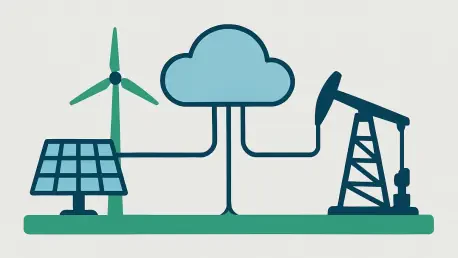
This immense data wealth is often trapped in isolated systems that do not communicate with one another. Critical information is fragmented across disparate enterprise IT systems like ERPs, specialized Operational Technology (OT) platforms such as SCADA, and a growing ecosystem of IoT devices. This siloed architecture creates a disjointed and incomplete view of the enterprise, making it incredibly difficult to perform integrated analysis or develop holistic operational strategies. For instance, financial data in an IT system remains disconnected from real-time production data from an OT system, preventing a clear line of sight between operational actions and their financial impact.
The consequences of this data fragmentation are profound, especially given the sector’s current challenges. Navigating extreme commodity price fluctuations, managing the integration of intermittent renewable energy sources, and complying with increasingly stringent decarbonization targets all demand agile, data-driven decision-making. The pressing need is for a unified data foundation that can break down these long-standing silos. Without a single source of truth, energy companies will struggle to harness the power of advanced analytics and AI, leaving them vulnerable to market disruptions and unable to effectively steer their transition toward a more sustainable future.
Catalysts for Change: Key Trends and Market Projections Driving AI Adoption
The Convergence of AI and Operations: Unlocking New Efficiencies
The shift toward AI-powered operations is driven by a powerful confluence of technological advancements and urgent business imperatives. A primary catalyst is the growing demand for real-time operational insights. In an industry where minutes of downtime can translate into millions of dollars in lost revenue, the ability to monitor, analyze, and act on live data streams is paramount. AI and machine learning models are becoming essential for optimizing drilling parameters, predicting equipment failure before it occurs, and balancing electrical grids with fluctuating inputs from solar and wind power.
Moreover, the strategic importance of decarbonization has elevated AI from a niche analytical tool to a core component of corporate strategy. Energy companies are leveraging AI to optimize energy consumption in their own operations, improve the efficiency of carbon capture technologies, and accurately forecast renewable energy generation. This convergence of AI and operations is no longer a futuristic concept but a present-day reality, enabling a new level of efficiency that simultaneously drives profitability and supports sustainability goals. Predictive maintenance, for example, not only reduces costs but also enhances safety and environmental performance by preventing catastrophic failures.
A Strong Market Consensus: The Inevitable Rise of Industry Specific Platforms
As the energy sector accelerates its digital transformation, a clear market consensus is forming around the value of industry-specific platforms over general-purpose solutions. Market data and analyst perspectives indicate a significant shift in enterprise strategy, with companies increasingly seeking tailored offerings that address their unique operational and regulatory challenges out of the box. General-purpose platforms, while powerful, often require extensive and costly customization to be effective in a highly specialized environment like energy, a process that can take years and drain significant resources.
Expert viewpoints reinforce this trend. Analysts like Stephen Catanzano of Omdia have noted that specialized solutions are “just better at solving the exact problems a sector faces,” as they come pre-configured with the right data models, integrations, and partner applications. This tailored approach drastically reduces time-to-value, allowing companies to move from concept to production much faster. Platforms like Snowflake’s Energy Solutions are designed to lower the barrier to entry for complex AI initiatives. By providing a curated, industry-specific foundation, they make advanced analytics more accessible to a sector that has historically been more technologically conservative, enabling a wider range of companies to innovate.
Overcoming InertiTackling the Industry’s Core Adoption Hurdles
Despite the clear potential of AI, the energy sector faces significant inertia when it comes to modernizing its data infrastructure. One of the most formidable obstacles is the integration of legacy systems. Decades of investment in proprietary OT and mainframe systems have created a complex and brittle technological landscape that is difficult and risky to overhaul. These systems often lack modern APIs and data standards, making it a monumental task to extract and unify data for analysis in a modern cloud environment.
Beyond the technical challenges, cultural resistance to new technologies presents a substantial hurdle. The energy industry prioritizes safety, reliability, and operational stability, which can foster a risk-averse culture that is skeptical of new, unproven technologies. Decision-making processes are often entrenched in long-standing workflows, and convincing engineers, field operators, and executives to trust and adopt AI-driven recommendations requires a significant change management effort. This cultural inertia is often compounded by a persistent shortage of specialized data science and AI talent with deep domain expertise in the energy sector, making it difficult to build and sustain internal capabilities.
Governance as a Foundation: Building Trust with Secure, Compliant AI
In a highly regulated industry where operational failures can have catastrophic consequences, the importance of robust data governance and security cannot be overstated. For energy companies to adopt AI at scale, they must first build a foundation of trust. This requires a platform that can ensure the integrity, security, and compliance of the data used to train and run AI models. A single, governed source of truth is essential to prevent models from being built on inaccurate or incomplete data, which could lead to flawed decisions with severe operational and financial repercussions.
Platforms like Snowflake’s are designed to address these critical governance requirements. By providing a unified data cloud with granular access controls, comprehensive data lineage, and robust security protocols, they enable companies to manage their data as a strategic, governed asset. This allows for secure data sharing with partners, suppliers, and regulators without compromising sensitive information. Ultimately, building trustworthy AI is not just about the sophistication of the algorithms; it is about the quality and governance of the underlying data. A strong governance framework mitigates risk and fosters the confidence needed for organizations to operationalize AI in mission-critical workflows.
The Road Ahead: Future Proofing Energy with Integrated AI and Strategic Partnerships
Looking forward, the trajectory for AI adoption in the energy sector will be defined by deeper integration with core operational systems and the expansion of a vibrant partner ecosystem. The next evolution of platforms will likely involve creating more seamless, real-time connections with foundational OT systems like SCADA and distributed control systems. This would enable a true closed-loop environment where AI-driven insights can automatically trigger operational adjustments, moving from decision support to automated control and optimization.
The role of strategic partnerships will also become increasingly critical. No single vendor can provide all the specialized applications and domain expertise required across the vast energy value chain. The success of platforms like Snowflake will depend heavily on the strength of their partner ecosystems, which bring pre-built applications, specialized consulting services, and deep industry knowledge. As recommended by analysts like Kevin Petrie of BARC U.S., deepening these partnerships will be crucial for channeling specialized AI expertise to customers, thereby accelerating their journey toward digital maturity and helping them future-proof their operations in an era of constant change.
The New Energy Blueprint: From Data Fragmentation to Intelligent Operations
The analysis of Snowflake’s AI suite revealed its profound potential to serve as a new blueprint for the energy sector. The examination showed how a unified, governed data foundation directly addressed the industry’s core challenge of data fragmentation, which has long hindered innovation. It was clear that by breaking down the silos between IT, OT, and IoT systems, the platform enabled a holistic view of operations, which was a prerequisite for developing trustworthy and effective AI applications.
This new blueprint ultimately redefined what was possible. The report detailed how the convergence of a secure data cloud, industry-specific applications, and advanced AI tools could transform reactive, siloed operations into proactive, intelligent workflows. This shift was shown to unlock significant value across the board, from enhancing operational efficiency and reliability to reducing costs and accelerating progress toward a more sustainable, lower-carbon future. The journey from data fragmentation to intelligent operations marked a pivotal turning point for the industry.