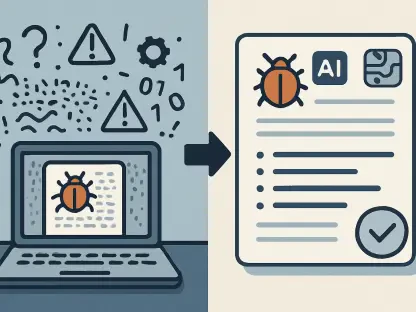

The sheer volume of scientific literature published every day has created a cognitive bottleneck that threatens to stifle the very innovation it is meant to document. In the current landscape of 2026, materials scientists are confronted with an overwhelming deluge of papers, patents, and technical reports, making it nearly impossible for any individual to synthesize the state of the art effectively. Traditionally, the identification of breakthrough materials, such as more efficient photovoltaics or ultra-resilient polymers, has relied heavily on human intuition and the serendipity of manual literature reviews. However, this reliance on personal expertise introduces a significant risk of bias and overlooked opportunities. A transformative study conducted by Marwitz and his colleagues has introduced a paradigm shift, utilizing Large Language Models (LLMs) combined with structured concept graphs to proactively forecast the next frontiers of research before they become mainstream. This approach represents a fundamental move toward a data-driven strategy that ensures scientists can navigate the vast expanse of existing knowledge with unprecedented precision and foresight.
Transitioning from Keyword Matching to Deep Semantic Analysis
Conventional methods of navigating scientific databases have long depended on keyword-based searches, which often fail to capture the subtle nuances of linguistic context or interdisciplinary connections. These reactive techniques require researchers to already possess a level of familiarity with the terminology they are searching for, creating an inherent feedback loop that can isolate scientific communities within their own niches. The framework proposed by Marwitz leverages the sophisticated natural language processing capabilities of LLMs to move beyond these surface-level matches. By training these models on a vast corpus of scientific text, the system learns to recognize the semantic meaning behind complex terminology. This allows the AI to understand how a specific material property might relate to a manufacturing process described in an entirely different subfield, effectively bridging the gap between isolated silos of knowledge that were previously disconnected and difficult to access through standard search protocols.
This shift toward semantic insight fundamentally changes how scientists interact with the global body of knowledge, turning a static archive into a dynamic, searchable intelligence. Instead of merely identifying where a term appears, the LLM-driven approach evaluates the conceptual density and the evolutionary trajectory of scientific ideas over time. For instance, the model can detect when a particular methodology from solid-state physics begins to show theoretical relevance to problems in organic chemistry, even if the explicit terminology has not yet converged. By analyzing millions of documents simultaneously, the system identifies the subtle shifts in research sentiment and the emergence of new theoretical frameworks. This capability ensures that researchers are no longer limited by their own cognitive scope, as the AI serves as a comprehensive filter that highlights the most promising and contextually relevant developments across the entire spectrum of materials science, promoting a much more holistic understanding of the research landscape.
Mapping Knowledge through Embeddings and Concept Graphs
The technical foundation of this predictive system relies on the transformation of unstructured textual data into high-dimensional vector spaces, commonly known as embeddings. These embeddings function as mathematical fingerprints for every scientific concept, capturing the intricate relationships between materials, properties, and applications based on their usage patterns in the literature. When an LLM processes a technical description, it maps these concepts into a spatial orientation where related ideas are clustered together. This mathematical representation allows the system to quantify the distance between different research topics, revealing how closely aligned certain materials are with specific performance metrics. By visualizing the landscape of materials science in this way, the AI can pinpoint specific areas where the density of information is low, suggesting that these regions may represent untapped potential for significant scientific discovery and technological advancement that human researchers might have overlooked.
Building upon these semantic embeddings, the framework integrates the data into structured concept graphs where scientific ideas act as nodes and their historical or theoretical relationships serve as connecting edges. This structural approach allows for the application of advanced graph algorithms to identify conceptual gaps—theoretical intersections where two or more ideas should logically interact but have not yet been documented in the published literature. These gaps represent the most fertile grounds for novel research, providing a roadmap for scientists who are looking to venture into unexplored territory. By mapping the entire knowledge space of the field, the system can simulate how new connections might form, effectively acting as a digital laboratory for conceptual experimentation. This integration of LLMs and graph theory provides a rigorous, data-driven methodology for understanding the architecture of scientific progress and directing attention toward the most impactful future inquiries.
Validating Predictive Accuracy through Historical Benchmarking
To demonstrate the practical utility of this AI-driven approach, the research team conducted an extensive validation process using historical data to see if the system could have predicted past breakthroughs. The results were remarkably consistent, showing that the model was able to identify nascent themes months or even years before they achieved mainstream popularity within the scientific community. A prominent example included the system’s ability to forecast the explosive growth in research surrounding ultra-stable perovskite structures and advanced solid-state electrolytes. The AI recognized these as high-potential areas based on the underlying conceptual links that were already present in earlier, more obscure publications. This retrospective success provides a high level of confidence in the system’s ability to operate in the present, offering stakeholders a reliable early warning system for innovation that can significantly reduce the time required to move from theoretical concept to practical application.
The implications of this predictive foresight extend far beyond the individual laboratory, impacting the entire scientific ecosystem from education to high-level policy making. For doctoral students and early-career researchers, such a tool provides a data-driven basis for selecting thesis topics that are likely to remain relevant and impactful throughout their careers. On a larger scale, funding agencies and institutional leaders can utilize these insights to allocate resources more effectively, ensuring that grants are directed toward areas with the highest potential for solving pressing global challenges. By prioritizing research directions that are mathematically shown to be on the verge of expansion, the scientific community can optimize its collective efforts and accelerate the pace of technological development. This strategic alignment of human expertise and machine intelligence creates a more efficient research environment, where the most promising ideas are identified and supported with unprecedented speed and precision.
Interpreting Machine Logic within an Augmented Intelligence Framework
One of the primary barriers to the widespread adoption of artificial intelligence in scientific research has been the black box nature of complex models, which often provide results without explaining the underlying reasoning. The methodology developed by Marwitz addresses this concern by prioritizing interpretability and transparency in its predictive outputs. Through the use of interactive visualizations, scientists can explore the concept graphs and trace the specific logical paths that led the AI to suggest a particular research trajectory. This allows researchers to see which specific papers, patents, and conceptual overlaps formed the basis of a prediction, transforming the AI from a cryptic oracle into a transparent collaborative tool. By providing this level of detail, the system encourages scientists to critically evaluate the AI’s suggestions, fostering a sense of trust and ensuring that the final decisions remain firmly in the hands of human experts who can verify the findings empirically.
This approach reinforces the concept of augmented intelligence, where the goal is to enhance rather than replace the creative and critical thinking capabilities of the human researcher. While the AI is exceptionally efficient at synthesizing millions of data points and identifying hidden patterns across vast datasets, it lacks the contextual understanding and physical intuition that define the scientific method. By automating the labor-intensive task of literature synthesis and trend analysis, the system frees up valuable time for scientists to focus on experimental design, hypothesis testing, and the ethical implications of their work. This synergy between machine processing power and human ingenuity represents a new era of scientific inquiry, where the computer handles the heavy lifting of data management while the human provides the creative spark and the rigorous validation necessary for true discovery. This collaborative model ensures that the future of science is both data-driven and human-centric.
Expanding the Scope across Scientific Disciplines
Although the initial application of this framework has focused on the complexities of materials science, the underlying methodology of combining LLMs with graph theory is inherently domain-agnostic. This flexibility suggests that the same predictive logic could be successfully applied to other data-intensive fields, such as drug discovery, genomics, or climate science, where the rate of publication similarly exceeds human capacity for review. In the context of pharmaceutical research, for example, the system could identify novel uses for existing compounds by mapping connections between different biological pathways and chemical structures. Similarly, in climate science, it could highlight overlooked materials for carbon capture by bridging the gap between chemical engineering and atmospheric physics. This interdisciplinary potential is one of the most exciting aspects of the technology, as it promises to foster collaboration between disparate fields and lead to breakthroughs that were previously obscured.
Despite the immense promise of AI-driven trend prediction, the scientific community must remain vigilant regarding the quality of data and the potential for algorithmic bias. The accuracy of any predictive model is strictly limited by the data it is trained on; if the existing literature contains systematic biases, such as a lack of published negative results or an over-representation of popular topics, the AI may inadvertently reinforce these patterns. Furthermore, there is a risk that widespread reliance on such tools could create research bubbles where everyone gravitates toward the same predicted trends, potentially stifling unconventional or high-risk ideas. To mitigate these risks, it is essential to maintain transparency and ensure that these tools are developed through open collaboration within the scientific community. Establishing ethical guidelines for the use of AI in research planning will be a critical step in ensuring that the pursuit of efficiency does not come at the expense of diversity and intellectual independence.
Moving toward a Proactive Model of Scientific Discovery
The integration of Large Language Models and concept graphs provided a clear roadmap for navigating the increasingly complex landscape of modern science. Researchers realized that the traditional, reactive methods of literature review were no longer sufficient to keep pace with the exponential growth of global data. By adopting these AI-driven frameworks, the scientific community established a more proactive stance toward discovery, where potential breakthroughs were anticipated through rigorous semantic analysis. The work performed by Marwitz and his team demonstrated that the most effective way to advance materials science was to treat the collective body of literature as a dynamic network of evolving ideas. As stakeholders moved forward, they prioritized the development of open-source tools and transparent algorithms to ensure that these powerful insights remained accessible to all. The focus shifted toward creating a global knowledge graph that bridged the gap between theoretical prediction and empirical reality, ultimately accelerating the development of the materials needed to address the most urgent technological challenges of the era.