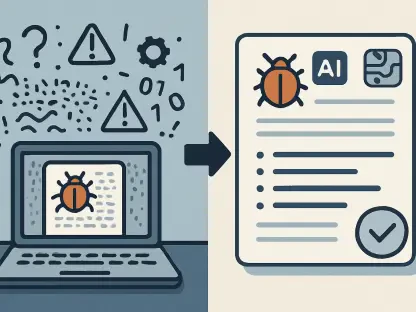
The rapid proliferation of microservices has created a landscape where manual API management is no longer just tedious; it is fundamentally unsustainable for modern enterprise scales. As developers navigate thousands of endpoints, the traditional approach of using fragmented tools for testing, documentation, and monitoring has hit a definitive ceiling. Postman’s transition toward an AI-native architecture represents a pivotal attempt to solve this by embedding intelligence directly into the development lifecycle rather than treating it as a bolt-on feature. This shift signals a departure from simple autocomplete suggestions toward a system that understands the deep context of an organization’s entire digital infrastructure.
The Paradigm Shift Toward AI-Native API Architectures
The industry is moving away from “AI-added” tools where a chatbot sits in a side panel, waiting for a prompt. In an AI-native environment, intelligence is baked into the very fabric of the platform, allowing it to proactively suggest improvements or identify vulnerabilities based on existing specifications. This means the system does not just react to a developer’s command but anticipates needs by analyzing the relationships between different services.
Such context-aware automation is what separates these new systems from traditional standalone assistants. While a standard assistant might help write a single line of code, an AI-native architecture understands how that code affects global dependencies and security protocols. For global developer ecosystems managing complex microservices, this evolution is essential for maintaining a coherent strategy amidst the noise of constant updates and decentralized team structures.
Core Pillars of the Postman AI-Native Platform
The Integrated AI Layer and Agent Mode
Postman’s integrated AI layer distinguishes itself by its access to internal metadata, including testing protocols and production behavior. This allows the platform to perform multi-step tasks that previously required human intervention. When a bug appears, the AI doesn’t just point to an error; it traces the logic through the API specification to suggest a fix that aligns with the established architecture.
The “Agent Mode” takes this further by diagnosing production issues and executing automated code changes. By operating within defined governance frameworks, it bridges the gap between identification and remediation. This level of autonomy is unique because it maintains a high degree of precision, reducing the “hallucination” risks common in generic large language models by grounding its logic in actual organizational data.
The API Catalog as a Central System of Record
Visibility remains the greatest hurdle in large-scale software engineering, often leading to redundant services and security gaps. The API Catalog functions as a definitive source of truth, providing a live overview of every service, its current performance metrics, and its designated owner. This central system of record ensures that the AI layer is not working in a vacuum but is instead informed by real-time operational reality.
By consolidating this data, organizations gain a level of accountability that was previously impossible to achieve with static documentation. When every API is tracked and its health is visible to both humans and AI agents, the risk of “shadow APIs” or abandoned endpoints is drastically reduced. This systematic approach transforms the development environment into a governed marketplace of reliable services.
Native Git Workflows and Local Repository Integration
Modern development requires a frictionless flow between local environments and cloud-based platforms. By synchronizing API specifications, mocks, and environments directly with version control systems like Git, the platform minimizes the “context switching” that often kills developer productivity. This integration ensures that the source code and the API definition remain perfectly aligned throughout the development cycle.
Local repository integration means that any change made in a familiar IDE is immediately reflected in the API ecosystem. This creates a tight feedback loop where testing and validation happen alongside coding. Moreover, this setup respects the existing workflows of seasoned engineers, making the adoption of AI-native features feel like a natural extension of their current habits rather than a forced transition to a new methodology.
Emerging Trends in API Orchestration and Integration
A significant trend in 2026 is the adoption of the Model Context Protocol (MCP), which allows AI layers to pull in telemetry data from external providers like Amazon CloudWatch or Sentry. This integration means the AI can correlate a spike in API latency with a specific deployment on GitHub. Such cross-platform intelligence allows for a more holistic view of the software development lifecycle, moving beyond the silo of the API platform itself.
Furthermore, industry behavior is shifting toward the consolidation of developer portals. Instead of hunting through separate sites for SDKs, sandboxes, and documentation, teams are demanding unified hubs. This evolution represents the transition from “API-first” strategies to “AI-coordinated” cycles, where the orchestration of various tools is handled by an intelligent middle layer that ensures consistency across all external-facing assets.
Real-World Applications and Enterprise Deployment
In large-scale organizations, the primary application of AI-native tools has been the elimination of fragmented service visibility. Teams can now deploy automated issue remediation that monitors production in real-time and alerts the relevant owners with a proposed solution. This proactive stance significantly reduces the “Mean Time to Repair” (MTTR), which is a critical metric for enterprises operating on a global scale.
Beyond internal maintenance, these tools are being used to rapidly generate and distribute SDKs to external partners. By automating the creation of client libraries, companies can ensure that their partners are always working with the most up-to-date versions of their services. This not only improves the partner experience but also strengthens the security of the broader ecosystem by ensuring that best practices are baked into the distributed code.
Technical Hurdles and Governance Limitations
Despite the benefits, granting AI agents the authority to modify production-ready code introduces significant security and compliance challenges. Many organizations remain hesitant to let an automated system push changes without rigorous human oversight. Navigating the complexity of data privacy, especially when AI must process sensitive internal specifications, requires a robust infrastructure that most small to mid-sized firms are still struggling to build.
There is also the ongoing difficulty of integrating diverse legacy tech stacks into a centralized AI layer. Not every service is built on modern standards, and the “intelligence” of the system is only as good as the data it can ingest. Consequently, refining the “human-in-the-loop” review process is currently the main focus for developers who want to balance the speed of AI with the safety of traditional engineering principles.
The Future of Automated API Lifecycles
The trajectory of this technology points toward self-healing API ecosystems that can automatically adapt to breaking changes or security threats without manual intervention. We can expect breakthroughs where AI-powered coordination spans the entire SDLC, from initial design to final deprecation. This would essentially turn API management into a background utility, allowing developers to focus entirely on core business logic rather than infrastructure maintenance.
The long-term impact will likely be a democratization of complex API management. As the barrier to entry for managing sophisticated microservices drops, smaller teams will be able to handle architectures that were previously only manageable by tech giants. This shift will redefine industry standards for speed and visibility, making high-performance software development more accessible to a wider range of industries.
Summary and Final Assessment
The shift from standalone API tools to integrated, AI-native platforms has fundamentally altered the developer experience by providing a level of context and automation previously reserved for manual oversight. By grounding intelligence in a central system of record and integrating it with existing Git workflows, the industry has addressed the critical need for visibility and consistency in modern microservices. While the technology is impressive, the primary challenge remained the balance between automation and human governance.
Moving forward, enterprises should focus on establishing clear boundaries for AI agency within their production environments. Success in this new landscape will require a focus on data quality within the API Catalog to ensure the AI has the most accurate information possible. As these platforms continue to evolve, the ability to maintain a single source of truth while leveraging decentralized AI agents will become the bedrock of any scalable software project. Professional teams must now prioritize the integration of these intelligent layers to remain competitive in an increasingly automated market.